
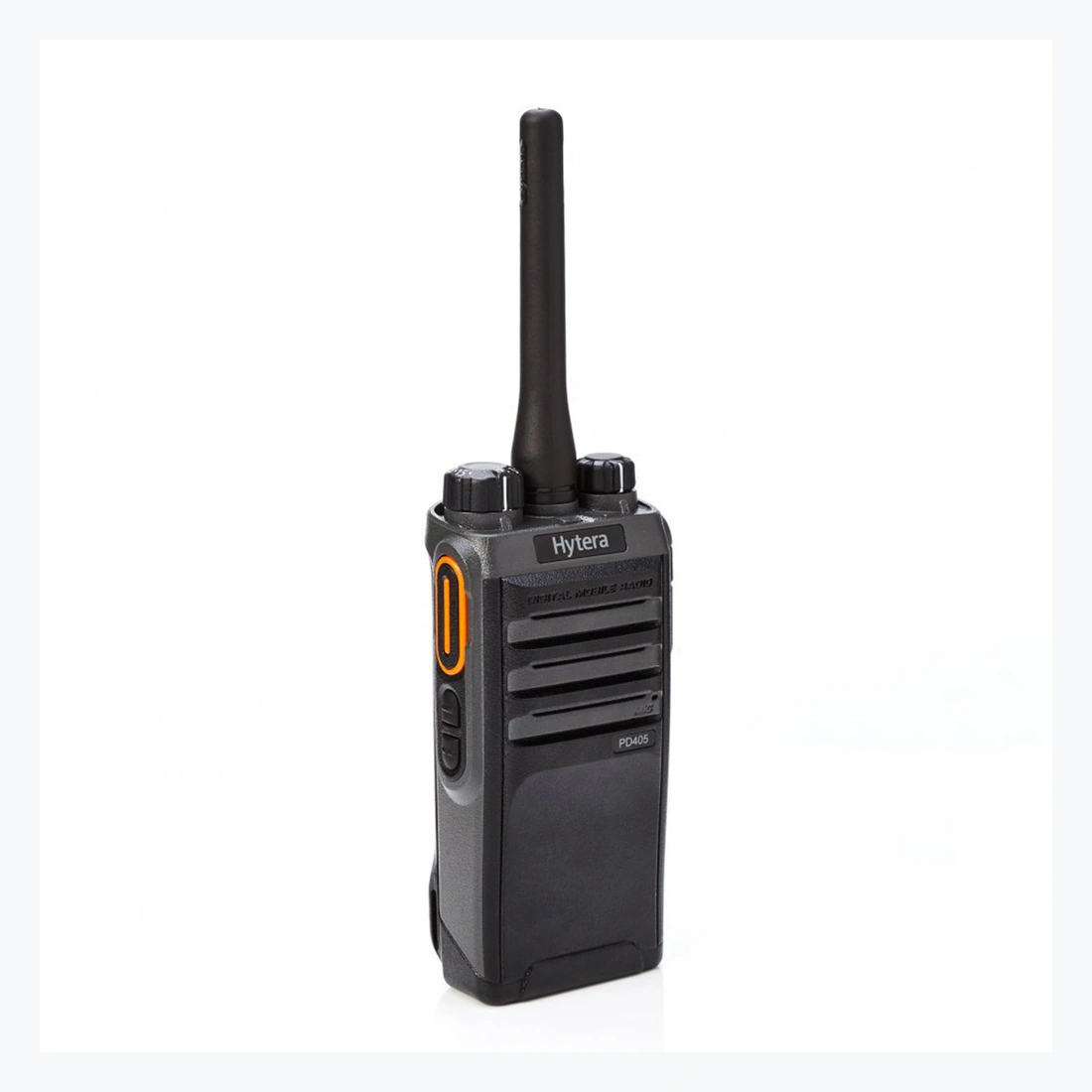
Not every user needs to see all channels and functions.
A field operator needs a simple profile, while a supervisor may require access to more groups or scan functions. Programming is performed according to user role rather than by copying one universal file to every radio.
Analogue channels
Frequencies, CTCSS/DCS, channel bandwidth, power and scan are configured according to the system and device capabilities.
DMR parameters
Color Code, Time Slot, Talkgroup/Contact, RX Group and other DMR settings are configured according to network topology and model support.
Zones and channel lists
Larger channel sets are organised into logical zones so users do not have to navigate unrelated functions.
Programmable buttons
Shortcuts, scan, monitor and other functions are assigned only where supported by the model and operationally useful.
User profile
Different roles can receive different channel layouts, group access levels and functions.
Configuration archive
Keeping a verified programming backup makes it easier to prepare replacement radios quickly and maintain the system later.
Configuration is part of the system, not an isolated file.
When analogue and digital radios are combined, compatibility of the specific models and functions is verified. Options that depend on hardware or software variants are not promised unless supported by the actual unit.
Programming behaviour is verified in real communication.
An incorrect channel, tone, group or unsupported function can look like a hardware fault. Programming status is therefore evaluated together with the radio model and network topology.
What is checked before a decision is made
Before deciding on an intervention, we review the symptoms, current configuration, RF path, associated accessories and operating conditions at the site.
From input data to a verified programming configuration.
The sequence is adapted to the system, but the channel plan is defined before individual radios are programmed.
Send us the radio models and the programming objective.
Provide the existing channels and groups, the required user organisation, and whether this is an existing or new configuration. Available functions are confirmed for the specific radio model and variant.