
A sound technical concept ties every decision to its function.
The number of radios alone does not define the network. User roles, zones, groups, buildings, vehicles and critical communications must be understood first; topology and equipment are selected only after that.
Functional requirement
Users, scenarios, priority groups, system operating hours, critical communications and the required level of continuity are defined.
RF topology
The design determines whether direct operation, a base point or a repeater system with an appropriate site and antennas is required.
Equipment plan
Handheld, mobile and base radios, repeaters, audio accessories, batteries and charging are selected according to role.
Channel and group plan
Communication groups are organised around the operational structure, with simple and predictable user programming.
Power and protection
For infrastructure points, power supply, protection and, where required, backup operation are defined according to system requirements.
Testing and acceptance
Representative test points, functional tests and acceptance criteria are planned to confirm system readiness.
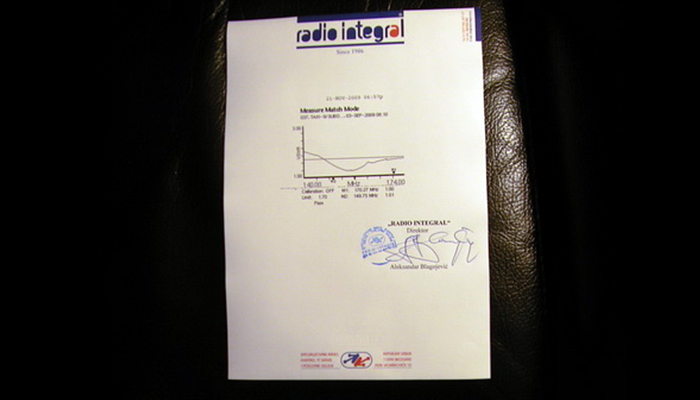
Documentation should make the system understandable long after the initial installation.
The value of documentation is that it records why a component was selected, which zones it must cover, how it is programmed and how its functionality is verified.
A documented system whose design decisions can be explained and verified.
Documentation is not decoration for the equipment. It reduces reliance on verbal agreements and makes later maintenance easier.
What is checked before a decision is made
Before deciding on an intervention, we review the symptoms, current configuration, RF path, associated accessories and operating conditions at the site.
From requirement to a controlled technical system.
The sequence is adapted to the scale of the project, but critical decisions are not skipped.
Send us a description of the site and how users operate.
For an initial assessment, useful inputs include the number of user groups, types of buildings, vehicles, critical zones and existing equipment. We can then define the required engineering depth and field verification.