
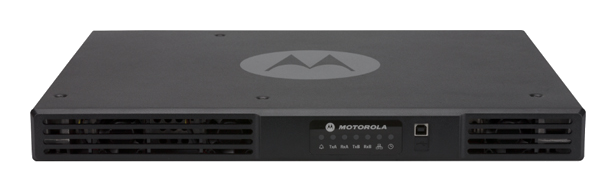
The site and antenna system are often more important than the equipment model.
A repeater in a poor location cannot compensate for an unfavourable RF path. The design must therefore consider site, antenna height, feeder, RF isolation, power, protection and critical coverage zones.
Simplex vs repeater
In simplex operation, radios communicate directly; a repeater introduces an infrastructure point that receives and retransmits the signal.
Location and height
A roof, tower or other favourable position is selected according to the area and structures the system must cover.
Duplexer and RF isolation
Simultaneous receive and transmit operation requires appropriate frequency and RF isolation so the transmitter does not desensitise the receiver.
Antenna and feeder
Antenna type, position, coaxial feeder, connectors and losses are all part of one RF system.
Power and protection
Stable power, appropriate protection and backup power where required all affect continuity of operation.
Maintenance
Periodic checks of the equipment, RF chain, antenna and connections reduce the risk of unnoticed system degradation.
Individual components must operate as one functional system.
Depending on the band and topology, suitable antennas, a duplexer or other RF configuration are used, and user radios are programmed for repeater operation.
A repeater system is introduced when direct communication is no longer sufficient.
Temporary projects also require planning for installation, transport and rapid commissioning; in permanent systems, maintenance and service access become part of the design.
What is checked before a decision is made
Before deciding on an intervention, we review the symptoms, current configuration, RF path, associated accessories and operating conditions at the site.
A clear process from analysis through maintenance.
Each phase has a defined problem, technical decision and final verification.
Send us the location, existing equipment and coverage objective.
The more precise the initial description, the easier it is to determine whether an RF survey, correction of existing infrastructure or engineering of a broader repeater system is required.