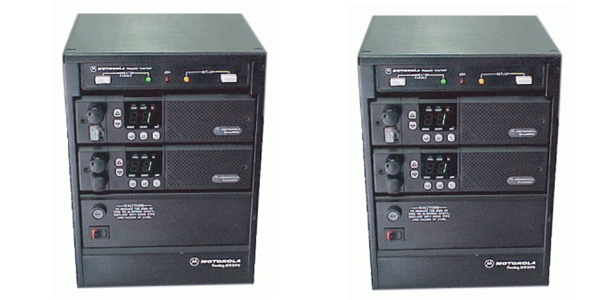
Central RF point
Receives the user signal and retransmits it from the infrastructure site within the engineered configuration.

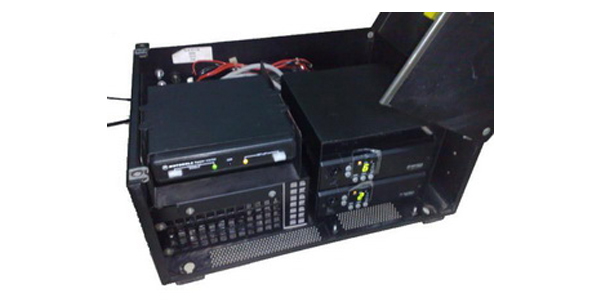
A professional repeater platform from the rental programme for systems where direct radio communication does not provide sufficiently stable coverage. The GR500 is used as an infrastructure point in a carefully planned RF configuration together with the antenna, appropriate receive/transmit isolation, power supply and correctly programmed user radios.
The most common mistake with repeater systems is to treat the repeater as a stand-alone “range booster” independent of its location. Real coverage primarily depends on RF site position, antenna, feeder, frequency plan, obstacles and user locations. Critical zones are therefore defined before deployment and the configuration is tested on site.
Specifications alone do not determine whether a model is right for a project. They must be considered together with the RF environment, user role, audio accessories, batteries and compatibility with the rest of the system.
Technical and programming details for older platforms are confirmed against the actual device and available service/rental documentation before handover.
Features are not enabled simply because they appear in a catalogue. They are used only when they suit the operating scenario and are supported by the exact device variant and the rest of the system.
Receives the user signal and retransmits it from the infrastructure site within the engineered configuration.
Used when a building or field site exceeds the limits of reliable direct simplex communication.
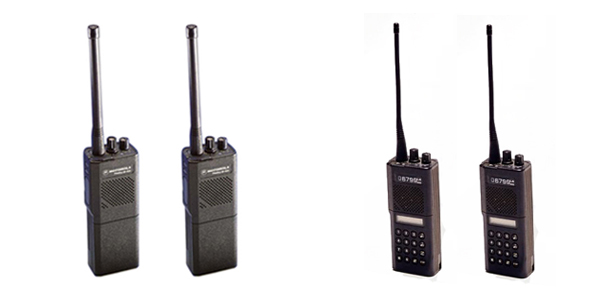
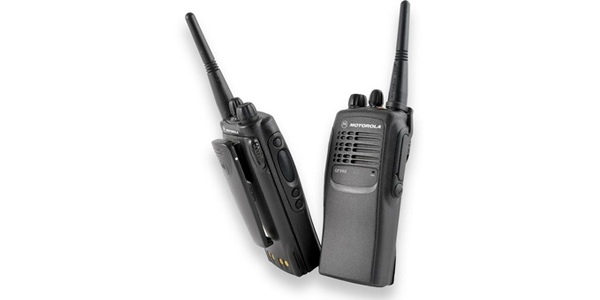
Handheld, mobile and base radios can operate through the same repeater infrastructure when programmed compatibly.
Antenna selection and placement often have a greater impact on the result than the repeater model itself.
It can form part of temporary rental infrastructure for events and field operations.
Critical zones are tested in the real environment before operational deployment.
Batteries, charging, audio accessories, antennas and carrying method are selected according to shift duration, noise level, discretion, protective equipment and user role. Compatibility is confirmed for the actual device.
Antenna type and height are selected according to the area and structures the system must cover.
Coaxial cable and connectors are selected according to loss, length and installation conditions.
Adequate RF isolation between receive and transmit paths is essential for stable system operation.
Stable, protected power reduces the risk of interruption at the infrastructure point.
Physical and electrical protection depend on the site and duration of the installation.
User radios and repeater parameters are documented for service and subsequent maintenance.
For predictable operation, the programming profile, audio accessories, battery and RF infrastructure must all follow the same system plan.
The examples below are not limitations of the model; they are common scenarios where its characteristics and accessories are a practical fit within a rental system.
Large and complex sites with multiple operational zones.
Production halls, basements and facilities with challenging RF conditions.
Permanent or temporary networks spanning multiple parts of a facility.
Coverage of field zones where a suitable infrastructure site is available.
The model, accessories and infrastructure must match the site, operating method and programming plan for the specific project.
Provide the location, dates, number of users, zones and shifts. Before handover, we confirm the exact variant, compatible accessories, programming profile and functional condition of the complete set.